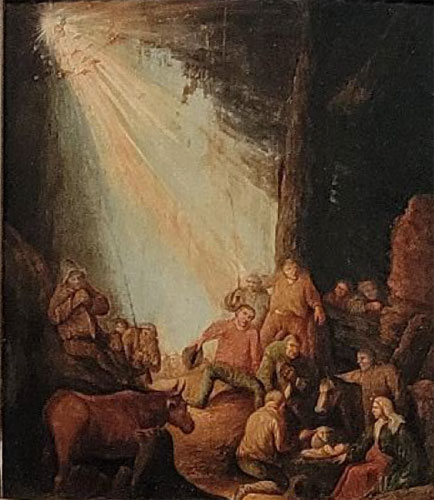
REMBRANDT HARMENSZOON van RIJN, usually referred to as REMBRANDT, was a Dutch Golden Age painter, printmaker and draftsman. He is generally considered one of the greatest visual artists in the history of art. His contributions to art came in a period of great wealth and societal achievements historians call the Dutch Golden Age (1588 -1672.)
Rembrandt never went abroad but was considerably influenced by the work of the Italian Old Masters, Leonardo da Vinci, Michelangelo and Raphael to name a few. His life was characterized by early success as a portrait painter and later years by personal tragedy and financial hardships.
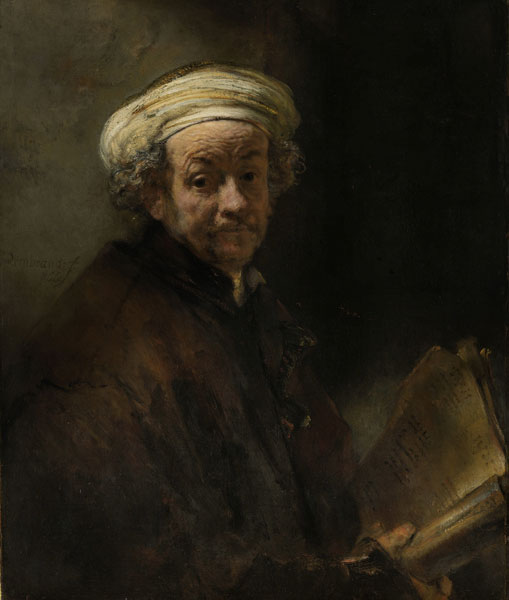
Yet his reputation as an artist remained high and his prolific work was extremely popular; approximately 300 paintings, 300 etchings and 2,000 drawings. Rembrandt’s portraits of his contemporaries, self-portraits, (40 in all) and illustrations from scenes depicted in the Bible are considered his greatest creative triumphs.
He attended the University of Leiden, Netherlands, at 13 years of age and later, around the age of 19, he opened a studio there with a friend. This studio included many pupils and Rembrandt’s authority greatly influenced them.
The next major portion of his life began in his mid-20’s when he moved to Amsterdam and began his career as a professional portraitist for the first time to great success.
He married his art dealer’s cousin there, became a member of the local guild of painters and borrowed money to purchase a house in a fashionable section of the city. That mortgage would be the cause of financial difficulties later in his life.
The neighborhood where he lived sheltered many Jewish immigrants and Rembrandt frequently used them as models for his Old Testament scenes. Rembrandt considered those biblical works to be a kind of “diary, an account of moments in his own life.” His immediate family, including two lovers, often figured prominently in his paintings of mythical and biblical themes. He even painted himself as a character in a crowd scene.
Rembrandt led a turbulent personal, legal and financial life. His marriage was fraught with personal disappointments. His wife Saskia died after only 8 years of marriage and 3 of their children died within weeks of their births. The drawings of Saskia during her illness and on her deathbed are among his most moving works.
Two ill-fated love affairs resulted in dramatic legal problems. Rembrandt habitually lived beyond his means. That eventually caught up with him when his house went into foreclosure. Sadly, upon his death, he was buried in a rented grave.
Rembrandt produced etchings for most of his career from 1626 to 1660. But this phase of his creative achievements was severely disrupted when he was forced to sell his printing press to settle some debts.
Several observations should be considered when putting Rembrandt’s body of work in the context of art history. He had a complete obsession with depicting the world around him as naturally as possible. And his late portraits are so compelling because his observations are sharper and it is as if we are looking straight into the person.
The arc of his life was captured in his self-portraits from an uncertain young man, through a stylish and very successful portrait painter to the troubled but massively powerful portraits in his old age.
Two observations about his craft played a central role in his technique. Rembrandt revolutionized painting with a 3-D effect using his impasto technique where strokes of paint protrude from the surface of the painting. The relief of the impasto increases the perceptibility of the paint by increasing its light-reflecting textural properties. Light was another obsession with Rembrandt.
He was a master of the chiaroscuro effect – astonishing details and realism with a narrative punctuated by dramatic lights, darks and shading. The main subjects are usually brighter with shadows framing them.
And then there is the “Rembrandt patch” to consider. This is characterized by an illuminated triangle under the eye of the subject on the less illuminated side of the face.
Controversy surrounded Rembrandt even many years after his passing. The French Romantic master, Eugene Delacroix, while expressing his admiration for Rembrandt, wrote in his “Journal,” “perhaps one day we will discover that Rembrandt is a much greater painter than Raphael.”
Rembrandt even exists as a phenomenon in pop culture today. There is an alternative rock duo called “The Rembrandts” and they wrote the theme song to “Friends” – “I’ll Be There For You.”