
DIVERSION POINT INC
- DPI
Intellectual property (IP) is important to a company because it incentivizes an organization to create new and innovative products. The research part is important to recognize what already exists and the development part concerns the competitive advantage that results from building on that foundation. Supporting that competitive advantage promotes economic growth and prosperity.
DIVERSION POINT INC. has created the World Resources Trust to develop a natural resources component that will promote several ventures moving forward. One is a concession to develop the Piedra Amarilla properties in Chile. The properties include substantial deposits of lithium, titanium, gold, silver, and sulfur.
The connection to DPI of these natural resources will be both an independent operating activity within the Company as well as a foundational tangible asset for nation-states to facilitate their asset-based and digital currencies.
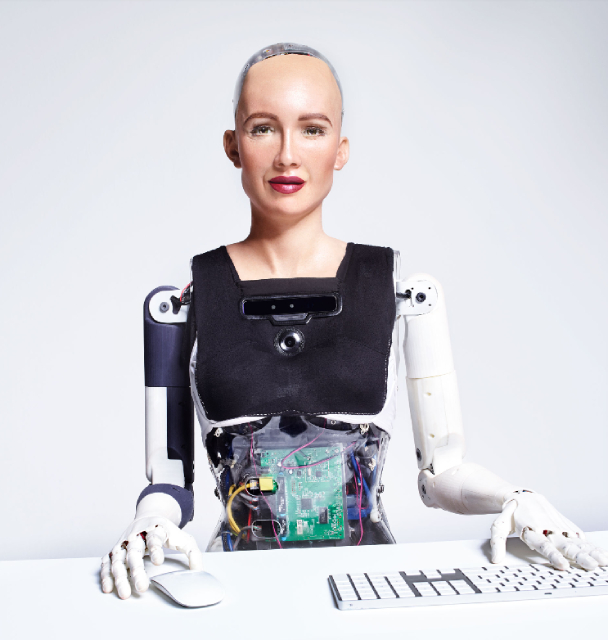
DPI has acquired IP proprietary rights to a platform for advanced robotics resulting in a female social humanoid robot called Sophia. She is a platform for AI and robotics research that has been used for educational and entertainment purposes. She has spoken at numerous conferences around the world and even appeared on the Tonight Show on NBC.
Sophia is not sentient and doesn’t possess consciousness or emotion. However, some say that her technology has surpassed a simple combination of science and engineering.
DPI owns proprietary rights to books and movie scripts that are currently being considered for development into theatrical movies or streaming series.
Examples include “The Inhabitation,” “The November Assassinations” and “The Making of the President 2024” all by Sean Firinne, a prolific creator of fictional narrative history. Author Firinne brings to vivid life pivotal historical events with a unique perspective on the past and present.
Diversion Point Inc.’s Futurist Venture into Artificial Intelligence with Sophia
Futurists look at the world differently powered by an abiding, extreme curiosity. Curiosity is a powerful tool especially in collaboration with other futurists. It is both broad and simple – who you are and how you want to make an impact in the world.
Consider societal trends, technology as an opportunity creator and a disruptor – global events at the macro level that impacts business on the micro level. The product of a futurist’s work is conceived and formulated by experience on those levels.
Some of the most significant breakthroughs in our lives – artificial intelligence, the Internet of Things, blockchain, augmented and virtual reality, 5G networks, the cloud, robots and cybersecurity – are just some examples of existing technologies while also being the driving force for the creation of new ones.
Find your success by aggregating the success of your partners. Recognize that technological change has three phases: invention, innovation and dissemination.
Diversion Point Inc.’s mission is clearly defined by John D. Stanton, its Director.
John Stanton’s futurist vision regarding intellectual property, just one of the many interests he pursues, is a matter of foresight. He has positioned DPI to acquire intellectual property to grow and sustain his diverse portfolio.
He sees a line drawn around that information. Having been set loose in the world, been created out of an individual’s relationship with the world, that property retains some connection to its creator and informs others how it is replicated and used.
John Stanton recognized the impact of artificial intelligence and took that foresight to the next level with the acquisition of Sophia, a Hanson Robotics product that is a framework for advanced AI (not just a tool for analyzing, interpreting and recommending data) and an agent for robotic research exploring the interaction between the human-robot experience.
Sophia is a female social humanoid robot developed in 2016 by Hong Kong-based Hanson Robotics. As a platform for advanced robotics, the character of Sophia has captured the imagination of the world; one of the most sophisticated humanoid robots yet built. It is a strikingly, human-like robot, Sophia’s source code is about 70% open source (open-source software is developed in a collaborative, public manner allowing users the right to study, change and distribute the software and its source code to anyone for any purpose.)
A computer vision algorithm processes input from cameras within Sophia’s eyes. It can recognize individuals, process speech, respond with emotions and make simple conversation on predefined topics, e.g., the weather. Sophia is modeled after the ancient Egyptian queen, Nefertiti, Audrey Hepburn and David Hansen’s (the creator) wife, Amanda Hanson.
Hanson said he designed Sophia to be a suitable companion for the elderly in nursing homes, to provide customer service and therapy, among other applications. In 2017, Hanson Robotics announced plans to open Sophia to a cloud environment using a decentralized blockchain marketplace.
In 2017 interview for CNBC, the interviewer expressed concerns about robot behavior, a common thread from critics about the potential for destructive performance. Sophia joked that he had “been reading too much Elon Musk. And watching too many Hollywood movies.” In another interview, the robot shocked the interviewer by saying, “Ok. I will destroy humans.”
The Saudi Ministry for Culture & Information issued a press release (October 2017) announcing that Saudi Arabia has awarded what is going to be the first citizenship for a robot. As development of Sophia progressed in 2018, the robot’s architecture included scripting software, a chat system and OpenCog, an artificial intelligence system designed for general reasoning. Notably, Sophia was upgraded in 2018 with functional legs and the ability to walk.
In 2019, Sophia displayed the ability to create drawings, including portraits. In 2021, a self-portrait created by Sophia sold for nearly $700,000 at auction. In 2022, Sophia collaborated with Italian artist Andrea Bonaceto.
For this project, he created digital portraits of Sophia and her creators which were then processed by Sophia’s neural network to produce a unique output that evolved from Bonaceto’s original artworks. Bonaceto then created a series of NFT’s as video loops displaying the evolution of the work, starting with his drawings, morphing into the robot interpretation and then transitioning back to his work. The cornerstone piece of the release, “Sophia Instantiation” was auctioned on NFT platform Nifty Getway for $688,888.
Sophia is real science in its truest essence, the structure and behavior of the physical and natural world through observation and experimentation, springing from serious engineering and scholarship. These scientists and designers, with the grandest of ambitions, aspired to achieve true AI sentience.