
A Message to Our Readers
In today's multi-media environment, it is so easy to become overwhelmed with too much information from too many sources. MANIFEST will present important, objective, practical information on the economy, politics, technology and investing to not only inform our readers but to present an insight into how QPG makes decisions on the strategic direction of the Company and the impact on how we will inform our Mission in the world. Some "forward-looking statements" are presented in real time and may involve adjustments as anticipated results evolve. We are obligated to our readers to be useful with information that is factual, friendly and easy to understand.
Artificial Intelligence - Part I
Artificial Intelligence (AI) has been with us in one form or another for the past 60 years and yet it seems more ubiquitous now and more misunderstood than ever. The AI funding landscape is quite dynamic with investment patterns shifting rapidly based on technological advancements, market conditions and regulatory changes.AI startups are having a dynamic impact with powerful tools that leverage advanced cognitive technologies that are easier to use every day. According to records over the last year, AI venture capital funding has attracted over $50B USD with particularly large investments going to companies working on generative AI and foundation models, e.g., GPT-4 and earlier GPT models by OpenAI demonstrates increasingly sophisticated language understanding and generative capabilities. Claude 3 AI is another foundation model that analyzes images and engages in detailed visual reasoning.
Caution and fear are just two of the sentiments associated with Artificial Intelligence. Organizations grapple with the implications of AI and machine learning as they don't basically understand the difference between the two. We'll start there. Artificial Intelligence is the broader concept of creating machines that can perform tasks that typically require human intelligence. This includes things like understanding language, recognizing patterns, making decisions and solving problems. AI encompasses the entire field of making computers "smart" in ways that mimic or exceed human capabilities.
Machine Learning (ML) is actually a subset of AI; it's one specific approach to creating artificial intelligence. ML focuses on developing systems that can learn and improve from experience without being explicitly programmed for every scenario. Instead of writing specific rules for every situation, we give ML systems large amounts of data and let them discover patterns and learn from them. Basically, AI is like the entire concept of human intelligence while ML is like one specific way humans learn through experience and pattern recognition.
Bottom line: While Machine Learning is a dominant approach, not all AI functions with machine learning. Machine Learning is focused on improving performance through experience while AI can include systems that don't necessarily learn or improve over time. AI systems can be rule-based (explicitly programmed) or learning-based while ML systems specifically learn from data.
So, the discussion about OpenAI includes the term Generative Artificial Intelligence which is a form many people are familiar with because of content creation. Generative AI alone saw hundreds of new startups created after the emergence of ChatGPT. Major hubs included Silicon Valley, New York, London, Beijing and Tel Aviv. Generative AI, and AI in general, can be split into two categories - "Strong AI" and "Weak AI." "Strong AI" is also known as "true AI." It is intended to think on its own. The human brain is the archetype of these systems. Strong AI is designed to be cognitive, to be aware of context and nuance and to make decisions that are not programmatic in nature, but rather the result of a reasoned analysis.
Strong AI is designed to learn and adapt to make better decisions tomorrow than it did today. Strong AI, due to its complexity, evolves quickly into numerous sub-branches. Because the goals of one strong AI system varies from one implementation to the next, two strong AI systems almost never resemble each other. This type of programming is incredibly complex and it is why the most examples we encounter today are "weak AI".
"Weak AI" is sometimes called "narrow AI." It is a collection of technologies that rely on algorithms and programmatic responses to simulate intelligence, generally focusing on a specific task. A voice recognition system like Alexa is an example of weak AI. Alexa may seem smart but actually doesn't have an advanced understanding of language or even the meaning of the words in the voice command. The program basically responds to sounds in your speech and follows its programming to execute certain actions. There is not actual "thinking" going on.
Non-player characters (NPC's) in gaming is another good example of weak AI. One last thought about Machine Learning; ML is just one example of AI put into use as a variety of other terms tend to be conflated with general AI concepts. For example, deep learning is a subset of Machine Learning that uses software to mimic brain activity as closely as possible.
Bottom line: Artificial Intelligence is hard. AI is complicated and many terms are thrown around conflating its description. The distinctions are important to understand to know what you are getting. Artificial Intelligence and Machine Learning by their very names do not convey simplicity. In truth, these are dazzingly complex technologies to understand but as more money is poured into R&D, AI will become more accessible, more democratized. So, it is time to stress an important factor. There is a fundamental truth to AI, it can't operate in a vacuum. It requires human intervention to develop, deploy, manage and maintain functionality.
McKinsey recently suggested that by 2030, 375M workers, 14% of the global workforce, would need to "switch occupational categories" as machines become increasingly capable of doing work previously reserved for humans. Buried in these reports, however, are a few details that should calm the masses regarding a machine takeover of the human population. It is unlikely that AI will take over humans anytime soon because human intelligence is more complex than pattern recognition. These are not systems that can replicate the abstract ways that a human thinks and works. They are designed to target narrowly defined problems. That means, according to the Gartner Report, that those 1.8M jobs lost will be offset by 2.3M new jobs created. Predictions are a net increase of 2M jobs in 2025.
Fun Facts
Disruptions create trillion dollar markets, dissolve industries, reshape human culture even to the point of national revolutions.Nothing is impervious to disruption, e.g., Blockbuster Video, big box stores like Sears, Family Dollar, Big Lots and even the music industry, as technology is changing the way music is created, produced, listened to and shared. It has given musicians and music-related businesses access to innovative ways of making money, reaching larger audiences and gaining even wider visibility.
Blockchain technology and digital currency, since 2008, with the first internet-wide alternative currency and payment system, Bitcoin, was invented, has been a roller coaster ride fraught with the riches of speculation and inconceivable wealth. Education and usability has lead to mass adoption with success and failure impacting financial markets globally.
The speculative nature of some digital currencies like bitcoin and ether (ETH), the native cryptocurrency of the Ethereum platform, can lead to price fluctuations, which creates market uncertainty, but measured monetary policy strategies can be instituted to manage the effects of wide-spread adoption. Inflation and interest rates can be affected which will drive innovation in various sectors beyond finance, potentially stimulating economic growth.
Historical Timeline
- Television (late 1940's)
- Email (1971) on the ARPANET (precursor to the web) widespread usage began late 1990's
- Mobile Technology & Cellphones (1973-1996)
- Motorola's analog mobile system (1973)
- Motorola's first digital hand-size mobile phone (1992)
- Motorola's first clamshellcellular phone(1996)
- Nokia's first phone to bring internet services to a mass market (2002)
- eCommerce (1991)
- Worldwide Web & Personal Computers (1997)
- Social Media (1997)
- MySpace (2003)
- Facebook (2004)
- YouTube (2005) for hosting and watching videos
- Twitter/X (2006)
- Smartphones, i.e., original iPhone released (2007)
- MySpace in decline (2008)
- DIGITAL CURRENCY (2008-2009)
- Bitcoin, the first internet-wide protocol and alternative currency/payment system invented (2008)
- Bitcoin protocol released as open-source software (2009)
- Uber and the larger sharing economy (2009)
- Ethereum protocol was conceived. The blockchain uses Ether (ETH) cryptocurrency to pay for transactions (2013)
- The first NFT, "Quantum" was minted on the Namecoin blockchain by Kevin McCoy. The Ethereum blockchain allowed NFT's to reach full potential by providing more accessibility for launching NFT's. (2014)
- FTX, a global cryptocurrency exchange that facilitated leveraged trading for commonly traded cryptocurrencies and NFT collectibles collapses, November 2nd - 12th. (2022)
- Bitcoin Ordinals on the Bitcoin Mainnet minted - the first ever Ordinal inscription. Ordinals are a way to create and store digital artifacts, e.g., NFT's directly on the Bitcoin blockchain. Digital artifacts can be of any content types also including audio, video, an assortment of images, animation or a combination.
Bottom line: Blockchain technology revolutionizes the way we house and store not not just digital currency but anything that holds value. These records, e.g., deeds/titles, copyrights, collectibles, tax records, digital libraries and complete financial transactions, can be transferred from point-to-point quickly and inexpensively in an extremely secure manner.
Time has proven that as the usability of a digital currency grows, so does the demand and so does the value of the coin.
Value is created by brand development and overall ease of use.
Bitcoin Rebound
Bitcoin is the world’s most traded cryptocurrency and represents the biggest player in the crypto market. It was the first digital coin; remains the most famous and widely adopted cryptocurrency in the world. The design of bitcoin was the creation of an entirely new asset class and an unparalleled step, at the time, away from traditional, centrally controlled money.
At that point in time, 2008-2009, less than 10% of the global population knew what cryptocurrency was or bitcoin for that matter. The awareness of cryptocurrency has become quite widespread now. In developed economies, surveys typically indicate that 80-90% of adults had at least heard of cryptocurrency even though their understanding was limited. A deeper understanding of exactly how crypto worked was significantly lower; often around 30-40% of respondents in surveys could actually describe basic concepts like blockchain.
Bitcoin prices often react to broader economic conditions like inflation or interest rate decisions, market sentiment (the general attitude of brokers and investors about the future price direction) and in particular, government decisions about cryptocurrency regulation. These factors can have a dramatic affect on the valuation of cryptocurrency. In 2025, we are now at a dynamic inflection point for the Bitcoin protocol and the bitcoin cryptocurrency for several reasons.
The price of bitcoin began to break higher in the last quarter of 2023. In January 2024, The Securities and Exchange Commission (SEC), the arm of the government responsible for regulating financial markets, announced that it would approve 11 spot bitcoin ETF’s proposed by asset managers including Fidelity, BlackRock and Grayscale. Bitcoin investors were exuberant as Spot Bitcoin ETF’s (funds that directly track the price of an underlying asset such as a commodity or cryptocurrency by holding it in reserve) offered an accessible alternative, a direct way for investors to tap into the crypto market.
Bottom line: This new chapter in the bitcoin story in the United States tracks the price of bitcoin by holding the cryptocurrency in reserve and backing each share of the ETF with the digital coin. Why is this significant?
This allows investors to gain exposure to bitcoin’s price without having to buy, store or manage the cryptocurrency themselves. This approach makes sense if long-term performance is important to you. However, you might prefer direct-access ownership of bitcoin if you are concerned about the regulatory or legal assets (property of the IRS) of cryptocurrency. Be aware that spot bitcoin ETF’s have management and brokerage fees that can range from 0.19% to 1.5%. Spot bitcoin ETF’s trade during traditional market hours, unlike bitcoin which trades 24/7.
Another significant factor regarding market forces was the fourth Bitcoin halving event that occurred in April 2024. This is a technical event programmed into the Bitcoin’s code that occurs approximately every four years (or specifically every 210,000 blocks) to control inflation. The previous halving occurred in May 2020 and the next one is expected to take place in 2028. Each halving reduces the reward miners receive for validating transactions by 50%, effectively reducing the rate of new bitcoin creation. This reduced supply growth historically precedes price increases.
Here’s how the halving event controls inflation. Mining rewards start high and decrease over time. Initially, miners received 50 bitcoins for each block they validated. After the first halving in 2012, this dropped to 25 bitcoins. The 2016 halving reduced it to 12.5 bitcoins and the 2020 halving brought it to 6.25 bitcoins per block. As the rate of new bitcoin creation slows while demand potentially increases, this controlled scarcity is designed to act in contravention to inflation. This slower rate of mining rewards ensures that the bitcoin hard cap of 21M coins is approached gradually rather than all at once. It’s similar to how precious metals, e.g., gold, maintain value through a natural scarcity.
Bottom line: The built-in mechanism of slowing the rate of mining rewards while demand increases contrasts sharply with traditional fiat currencies where central banks can increase the money supply at will. Bitcoin’s predetermined and increasingly restrictive supply schedule aims to make it resistant to the kind of inflation that can affect government-issued fiat currencies.

The U.S. has reached another pivotal point as cryptocurrencies enter into the mainstream. The question becomes, “How will digital assets be regulated and how will the second administration of Donald Trump affect the digital asset business?”
A dramatic shift has occurred since Trump’s first presidency when he was dismissive of bitcoin as a “scam” and criticized it for competing against the U.S. dollar. In a surprising reversal, he has positioned himself as a crypto-champion and has pledged to make the United States “the crypto capital of the planet.” This year, he has fully embraced cryptocurrency and became known as the “First Crypto President.” In January of this year, President Trump and Melania Trump launched two memecoins: $TRUMP and $MELANIA. His was a great entry into the cryptocurrency market launched on the Solana blockchain with a market cap that crossed over 9B USD in two days after the launch. Launch price sold at 0.18 USD. First Lady Melania Trump’s memecoin was valued at between 7-14 USD with a one-time market cap of 1.65B USD.
A side note: Memecoins are cryptocurrencies that are produced as a light-hearted joke. In spite of that, some memecoins have ballooned in value, gained multi-billion dollar market caps and were promoted with celebrity endorsements. The original and most prominent memecoin is Dogecoin (DOGE) created in 2013. It was created to poke fun at bitcoin (BTC). It was a deliberate misspelling of “dog” to ensure the crypto was “as ridiculous as possible.” The story was picked up by mainstream media outlets, helping it to gain further investors and influence. But it wasn’t until celebrities began endorsing Dogecoin that the price escalated. The coin’s most high-profile advocate was Tesla CEO, Elon Musk. Dogecoin still serves as an inspiration for memecoins despite their lack of fundamental value or unique use cases. The sole use case for most memecoins is pure speculation.
President Trump’s personal crypto venture, World Liberty Financial, further indicates his embrace of the industry. Among one of his more ambitious proposals is the establishment of a strategic bitcoin reserve creating a stockpile of bitcoin to maintain a competitive advantage against China. In a noteworthy way, this shift is reflective of a broader public sentiment warming to digital assets as a legitimate investment class particularly with the SEC’s recent regulatory approval of spot bitcoin and spot ether ETF’s. Incidentally, during the first Trump administration, the SEC made several important cryptocurrency-related regulatory decisions, including rejecting multiple Bitcoin ETF proposals which impacted market sentiment. According to a Forbes report, President Trump now plans to sign executive orders to elevate cryptocurrency to a national policy and form a Presidential Council on Cryptocurrencies for the purpose of providing guidance on integrating digital assets into the U.S. financial system.
Also, the nomination of pro-business Republican, Paul Adkins, as the new chair of the SEC, signals a lighter touch in a regulatory approach. He will guide the agency with his pro-innovation philosophy toward clearer crypto guidelines.
Post Script:
The closing price for bitcoin (BTC) between 2021 and 2024 was 93,429.20 USD.
It was up 222.2% at that time. At the beginning of 2024, first week in January, BTC traded at around 43,906 USD with a market capitalization of around 915.81B USD.
As of this reporting, first two months of 2025, BTC currently stands at around 104,723.4 USD with a change of +1.38%. BTC is up +12.13% since the beginning of 2025 and is predicted to decrease -0.93% by the end of 2025.
After reaching its all-time high (ATH) of 108,264.5 USD in December 2024, BTC is constantly fluctuating.
MANIFEST - Interview with JOE KAUFMAN - Part II
Joe Kaufman is the Chief Executive Officer of EPEIUS, a programming company, in partnership with another tech innovator, Foolproof Labs, to deliver user-friendly informational and financial products running on patented blockchain technology. EPEIUS is utilizing tools developed and perfected from previous experience with clients in the defense, gaming, healthcare and data industries to deliver preeminent products between the Web2 and Web3 universes. The global team assembled by Epeius and Foolproof Labs has the demonstrated skill sets, innovative understanding of data, blockchain software and mobile applications to drive client engagement with a progression of proprietary, immutable tech stacks to capture value for the participants in the DiscoverArte and ArteAware platforms. Here is a continuation of the conversation with Joe Kaufman which began in the Octobet-November-December 2024 edition of MANIFEST.
1) Artificial Intelligence is prominent in the news now because the technology has become widely accessible to the public through advancements like generative AI, e.g., ChatGPT, making it an impactful tool for everyday users. We will be discussing the multiple ways to classify AI by its capabilities and its functionality in MANIFEST. Could you comment on the technology and the impact it will have on this venture with QPG?
DiscoverArte, QPG's advanced art platform, delivers a sophisticated and elegant gateway for merging the world's most prestigious artworks, held in some of the most revered collections, with progressive and user-friendly products created by our sister company, Foolproof Labs.
Epeius is using tools developed and refined with demonstative achievements for clients in the gaming, defense and a broad sector of the data industry related to collecting, storing, analyzing and interpreting data.
As I mentioned previously, DiscoverArte begins at the preservation level. From there, the ability to grow value, educate end-users, expand products for teaching and provide digital access to art evolves. The DiscoverArte platform can give assistance to nations under threat to preserve their most at-risk artistic heritage.
All of this can be formed in 501c3's managed through blockchain-powered memberships and tokenized giving programs with tax savings embedded into every developed program's foundational structure. Presently, EPEIUS is building AI tools for the DiscoverArte (DA) and ArteAware (AA) platforms, with support from Anthropic, Intel and Salesforce. AI is changing daily and we keep close attention on numerous providers in the AI-technology world but these are the tools we have selected for now. Time management is critical in a venture of this size. We are able to prioritize tasks to boost productivity which delivers a better quality work/life balance.
AI can significantly improve the client onboarding experience. Automating repetitive tasks and analyzing client behavior will provide for a more personalized experience. Real-time support is performed by chatbots.
AI-enhanced asset narrative management creates a better foundational system for the collection by providing a visitor to the platform an expansive and immersive understanding of the collection. Consider that Ai-driven story telling can include a customized voice of a long-lost artist providing the soundtrack to an enhanced audio tour taking the user through the history of an art piece.
This can be one of the most effective ways to convert a user to a buyer and a buyer to a dues paying supporter.
AI automation is significantly important to customer relationship management systems in another way. Automation can impact control especially limiting costly staffing requirements. The necessary support for a platform of this size would have required full-time staffing only five years ago.
2) To broaden our discussion on the preservation role of the DiscoverArte platform, could you comment on the role of the Near-Field Communication Chip (NFC) to bridge the physical and digital realms of the Prestigious World Assets (the QPG Art Collection.)
Quantum Projects Group has commissioned Epeius to create the Near-Field Communications (NFC) Chip to bridge the physical (Prestigious World Asset) and digital realms. The chip is attached to the frame of each painting in the Collection. It will verify each painting's provenance on-chain and ownership via a specially developed app enabling a seamless connection between the artwork and its digital representation. The usage of NFC Chips within the DiscoverArte platform is to support and enhance Proof of Existence (POE) while expanding on the possibilities of location determination shortening time windows for services included within asset Deed of Ownership (DOO). DOO services include asset underwriting, asset collateralization and digital asset Over-the-Counter (OTC) transfers with physical asset relocation costs and risks being substantially mitigated.
Without knowing the tech in place on the paintings currently, we cannot determine the age, current operational standard and viability of utilizing those on-frame chips for our purposes.
NFC chips are constantly evolving and we are committed to presenting the best options once we can determine what is currently being used. Asset chipping is not an issue. What is an issue is the chip's quality and current status. The finest art deserves nothing less than the highest quality tech design.
3) With cryptocurrency so dominant in the news cycle right now, I thought we might talk more about the role of Bitcoin Ordinals in your business with QPG.
Technologically speaking, the Ordinal ecosystem is still in its infancy but it links to history as do the Prestigious World Assets. As bitcoin continues to dominate the conversation for cryptocurrency and drive the adoption by wealth, it is showing itself to be the most expansively sought after and treasured cryptocurrency.
We see an intrinsic value and unequalled opportunity in the relatively immature products and services currently on offer in the Bitcoin ecosystem. This market offers opportunities to bring immense value to DiscoverArte and to unlock the illiquid bitcoin that has found itself gaining value, unable to fully leverage that value to its fullest potential.
Leveraging this wealth and bringing PWA's into the BTC world, while relying on the more advanced technology Epeius and Foolproof Labs has created, will allow DA and QPG to realize significant revenue from a global clientele and provide liquid surfacing and asset leveraging to an untapped, massive trillion- dollar market segment. Ignoring this inclusive product offering would be indefensible.
Stock Market Outlook for 2025

The stock market outlook for 2025 suggests a cautious but optimistic perspective. Steppng into a new year, investors have much to be excited about. In no particular order, this continuing economic growth benefitted from stronger-than-expected corporate earnings, artificial intelligence, exciting numerous stock splits and the election of Donald Trump for a second term in the White House. Qualitatively, a reason to own individual stocks and managed funds is that investing is intellectually and emotionally satisfying.
Economists typically group economic indicators, i.e., macroeconomic statistics, under one of three classifications – leading, lagging or coincident. These indicators are important information for investors, policymakers and business decision-makers. Coincident and lagging indicators provide investors with some confirmation of where the economy is, where it has been recently and where it might be heading. All of this information is freely available from government agencies and other organizations that compile, analyze and report data.
Leading market indicators are economic measures that are referenced to help forecast the direction of the economy. These indicators are valued more highly than other indicators because they are seen as predicting the future of economic activity rather than recording the recent past. Leading indicators include the Consumer Confidence Index (CCI), initial jobless claims and durable goods orders.
In order for an economic indicator to have predictive, future value for investors, it must be forward looking with meaningful statistics about the direction of the economy starting with the major market indexes, i.e., the Dow Jones Industrial Average, Nasdaq Composite, S&P 500 and Russell 1000 to cite some major participants. (The S&P 500 Index hit a record high 57 times in 2024, delivering a 25% ROI. Analysts estimate the S&P 500 Index to reach approximately 5,975 by the end of September 2025 for a modest increase.) (Source: yahoo.com) Meaningful statistics should include information about stocks, stocks futures markets, foreign exchange rates, bond and mortgage interest rates (including the yield curve), and commodity prices, e.g., gold and other precious metals, oil and grains to recognize a few.
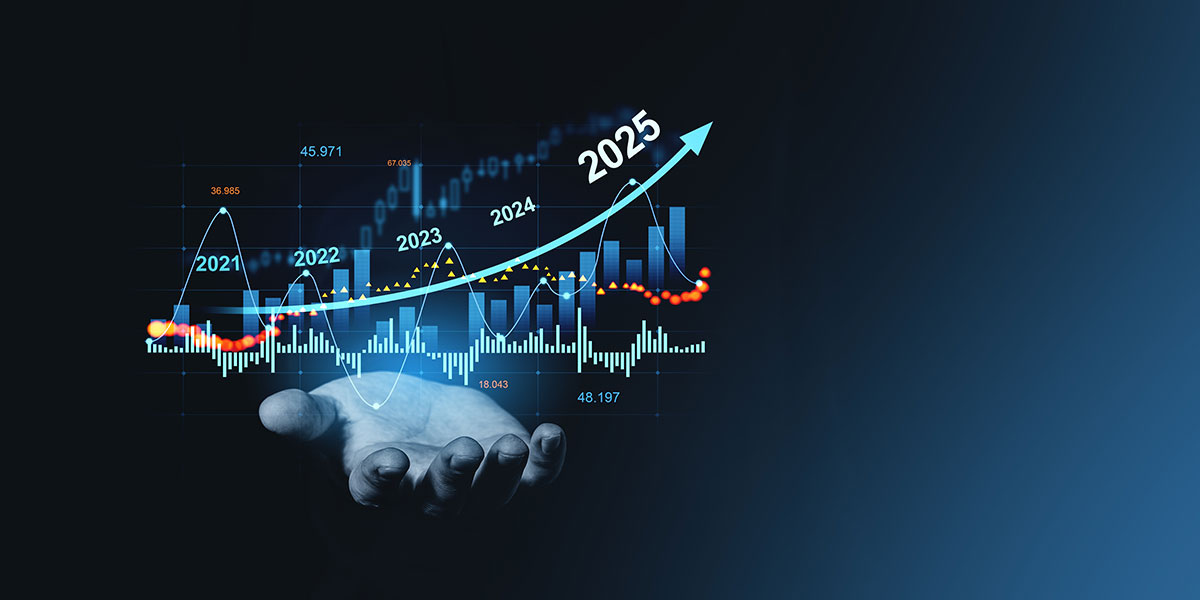
In addition, economic indicators are statistical measures of various economic metrics such as Gross Domestic Product (GDP), Unemployment Insurance Weekly Claims Report (trend upward in a weakening economy), inflation rates reported primarily through the Consumer Price Index (CPI) and consumer spending measured by The U.S. Bureau of Economic Analysis (BEA). The BEA’s measure of consumer spending in the U.S. is called Personal Consumption Expenditures (PCE). PCE includes spending on durable and non-durable goods and services. The BEA’s national economic statistics also include information on production, investment, exports, imports, income and saving.
Consumer spending is a major driver of economic growth in the United States. The Consumer Confidence Index (CCI) is released by the Conference Board, a non-profit business research group. This report is one of several that measure and track perceptions and attitudes of consumers particularly focusing on how they regard their personal financial wellbeing.
No trend has been hotter on Wall Street over the last two years than the rise of AI. No company has benefited more directly than Nvidia (NASDAQ:NVDA). NVDA- +3.16%, delivers the best performance in the DJIA for AI chips.
Financial stocks, i.e., companies that provide financial products or services, are very favorable due to an expanding economy and some spectacular 2024 third-quarter results. All told, over the past 12 months, financial shares surged 31%. That beat the 25% return in the S&P 500 Index. Only communications services (up 40%) and information technology (up 37%) fared better.
Analysts expect financial companies to post 7%-9% growth in earnings in 2025 compared with 2024. (Source: Kiplinger)
With the exception of notoriously cyclical materials, i.e., building and paper products, chemicals and natural resources, no sector has performed worse in 2024 than healthcare, up just 0.6% at the end of 2024. Though concerns are expressed about a Trump administration approach to drug pricing and/or marketing practices for healthcare companies, the risk-versus-reward profile for healthcare stocks is now very favorable.
Consumer cyclical stocks, (strongly allied with the ups and downs of the business cycle), particularly consumer spending, may disappoint most in 2025. These stocks include industries like retail, automotive and entertainment. The Federal Reserve kept the fed funds rate steady at the 4.25%-4.5% range during its January 2025 meeting, pausing its rate-cutting cycle after three consecutive reductions in 2024 that totaled a full percentage point. Two more interest rate cuts may be planned for 2025 and this means less pressure on consumers’ wallets leading to the potential for more discretionary spending.
BlackRock is the world’s largest asset manager. BlackRock’s exchange-traded funds are used widely by retail and institutional investors. This drove growth in assets under management to the 11.5T USD point at the end of 2024. In addition, BlackRock has Aladdin, a technology platform that financial firms around the world use to analyze risk, manage portfolios and make investment decisions. It “provides a diversified revenue stream and gives the firm a competitive edge over other plain-vanilla asset managers,” says CFRA Research analyst Catherine Seifert.
Caveat: Indicators are not perfect and can always be upended by unexpected events. They are most useful when they are tracked over time so that the larger trend can be recognized. Higher risks of volatility could impact market stability particularly relating to policy changes enacted by a new administration in Washington. The old adage remains true today, “Knowing is half the battle and the same is true with investing in the stock market.”

"INVESTING BY NATURE IS AN ACT OF OPTIMISM."
-CHARLES SCHWAB
The information provided within this content is for general informational purposes. The content is not intended to be a substitute for professional advice. Before making any financial or investment decisions, we strongly recommend that you:
1) conduct thorough research;
2) consider your specific financial situation and goals;
3) understand all associated risks;
4) consult with qualified financial professionals, tax advisors and legal counsel.