
A Message to Our Readers
In today's multi-media environment, it is so easy to become overwhelmed with too much information from too many sources. MANIFEST will present important, objective, practical information on the economy, politics, technology and investing to not only inform our readers but to present an insight into how QPG makes decisions on the strategic direction of the Company and the impact on how we will inform our Mission in the world. Some "forward-looking statements" are presented in real time and may involve adjustments as anticipated results evolve. We are obligated to our readers to be useful with information that is factual, friendly and easy to understand.
Artificial Intelligence - Part II
The Read-In - EPEIUS
A Message for Our Readers
Quantum Projects Group accepts as true that we have the potential to imagine and shape the world we want to live in. The different aspects of culture interconnect in complex, dynamic ways.
In a world where communication is essential, material culture (i.e., the technological tools and innovations that shape our daily lives, the creative expressions in physical form of art and design, objects made or modified by humans from stone tools to smartphones provide concrete evidence on how society functions) provides the clues to piece together the stories of tomorrow. The future doesn't just happen to us.
The Read-In is a forum to navigate important issues and prepare our readers for future developments in the QPG Mission. When major changes occur in one cultural domain, ( i.e., economic shifts, technological innovations) the effects ripple throughout the entire cultural system, creating periods of adaptation, tension and eventually new cultural manifestations. The Read-In will gather, verify and report on important issues for our QPG family to meaningfully participate and piece together the stories of tomorrow.
The Read-In will produce content over multiple formats, e.g., text stories, photos, videos and graphics. It will be comprehensive, timely, relevant and entertaining.

Important Reminder Regarding the Bitcoin and Ethereum Blockchains
EPEIUS

A Conversation with American Physicist and Futurist Michio Kaku
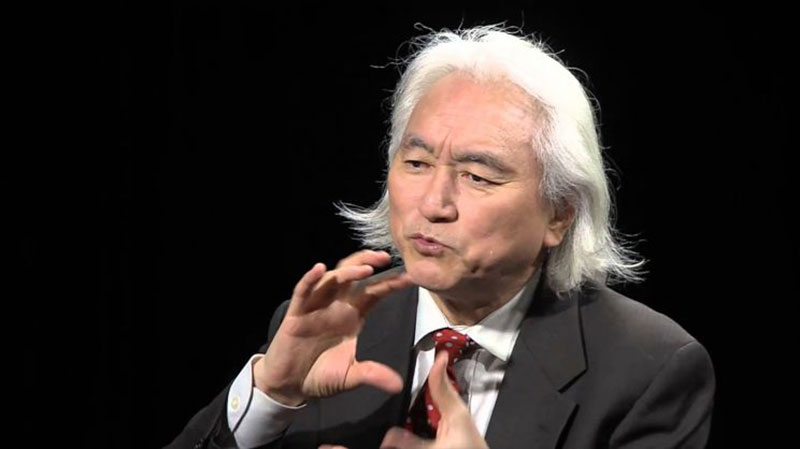
The public's anxiety over developing artificial intelligence technology is misguided according to theoretical physicist and prominent futurist Michio Kaku. Kaku is widely known as a popularizer of science and connecting theoretical physics to the real world in straightforward terms. He has written books, appeared on many television programs and hosts a weekly radio program. He was a protégé of Edward Teller, an American theoretical physicist and chemical engineer who is known colloquially as "the father of the hydrogen bomb."
Michio Kaku was born in 1947 in San Jose, CA. to second generation Japanese parents. He was fascinated with Albert Einstein as a young man and even built an "atom smasher" that was powerful enough to produce antimatter using scrap metal and 22 miles of wire in his parents' garage.
Kaku graduated from Harvard College in 1968, summa cum laude, and attended the Berkely Radiation Laboratory at UC, Berkeley, receiving a PhD and holding a lectureship at Princeton University in 1972. Kaku was drafted in 1968 during the Vietnam War, joined the Army and remained until 1970. Between 1970 and 2000, Kaku had papers published in physics journals and co-authored the first papers describing string theory.
Kaku has appeared in many forms of media, on many programs and networks including The History Channel, NBC, ABC, CBS and Fox News, The Discovery Channel, The Science Channel and Al Jazeera English. In 2008, Kaku hosted a three-hour BBC-TV documentary "Visions of the Future" dealing with the future of computers, medicine and quantum physics. In 2009, he hosted a 12-episode television series on the Science Channel called "Sci Fi Science: Physics of the Impossible," based on the book of the same name. Themes included parallel universes, time travel and warp drive. Each episode included interviews with other scientists working on prototypes of these technologies and interviews with science fiction fans. Kaku is generally a vigorous supporter of the exploration of space. He is particularly concerned with the misuse of science regarding nuclear armament and power in regard to protection of the planet.
According to Kaku, humanity is in the second stage of the computer evolution. The first stage was the analog stage "when we computed with sticks, stones, levers, gears, pulleys, string." After that, around WWII, he said, we switched to electricity-powered transistors. It made the development of the microchip possible and helped shape today's digital landscape. But this digital landscape rests on the idea of two states like "on"and "off" and uses binary notation composed of zeros and ones.
"Mother Nature would laugh at us because Mother Nature does not use zeros and ones," Kaku says. "Mother Nature computes on electrons, electron waves, waves that create molecules. And that's why we are now entering stage three." He believes that the next technological stage will be in the quantum realm.
Quantum computing is an emerging technology utilizing the states of particles like electrons to vastly increase a computer's processing power. Instead of using computer chips with two states, quantum computers use various states of vibrating waves. It makes them capable of analyzing and solving problems much faster than normal computers. Several tech giants - IBM (IBM), Microsoft (MSFT), Google (GOOG) and Amazon (AMZN), among others, are developing their own quantum computers. The computers could help businesses with supply chain logistics, risk analysis and machine learning. Quantum computing could also advance health care to find cures for cancer, Parkinson's Disease and Alzheimer's Disease. These diseases are at the molecular level. We are challenged to cure these diseases because we have to learn the language of nature which is the language of molecules and quantum electrons.
Kaku believes the intense attention to Artificial Intelligence now is noteworthy but that there is something else we should be paying attention to, quantum computing. It is an emerging field that aims to use the weird properties of quantum particles to make computers that have vastly more processing power than computers have today. How does this technology affect Artificial Intelligence?
Quantum computers can process vast amounts of information simultaneously through quantum bits (qubits), potentially solving complex AI problems exponentially faster than classical computers.
Bottom line: This could accelerate training for large AI models and enable more sophisticated algorithms. Many AI challenges involve finding optimal solutions in massive search spaces. Quantum search algorithms can improve everything from routing logistics to neural network architectural searches. Data is processed in quantum neural networks in ways impossible for classical computers, potentially discovering patterns in complex datasets that traditional AI would miss.
What are some challenges? Quantum computers can produce high error rates, require extreme cooling conditions and have limited qubit counts. The most immediate practical applications likely involve hybrid systems where quantum computers handle specific tasks they excel at, while classical systems manage other aspects of AI workflows.
Dr. Kaku points out the the characteristics of a transistor and an atom and the important implications of the human element. "A transistor has two states, up and down, left and right, true and false. An atom expands either up or down, Two states. The digital revolution is based on that idea," he explains. "The quantum computer can be at any angle. Think about that. Infinitely more states that you can create if an electron is allowed to wobble and point in any direction whatsoever rather than up or down."
Bottom line: Quantum computing is computing using not computer chips but using these waves. "That's right. These waves can vibrate in any direction, they're simultaneous. So that it can actually calculate two or three points at the same time."
Common sense says you cannot be in two places at the same time. In quantum theory, you can be many places at the same time. That's the power of quantum computers.
A quantum computer is like a chandelier, a gigantic device. The actual computation is done at the very bottom. So, what is the chandelier? The chandelier is cooling pipes. Cooling pipes to bring down to near absolute zero where there is no vibration. The slightest disturbance can ruin your whole calculation. That's why everything must be frozen near absolute zero. Massive amounts of energy are needed to produce results.
So, consider the human brain. Researchers have found that there are no dormant parts of the brain and most of the brain is active almost all of the time. Although it is impossible to calculate precisely, it is postulated that the human brain can process a billion billion calculations per second. And it's very energy efficient; you don't need all the cooling requirements of a massive computer system.
Michio Kaku puts a finer point on this discussion. "Mother Nature is still ahead of us. Our brain is the most complex object in the known universe. We know of nothing in the universe more complex than the human brain. It has 100 billion neurons. Each neuron can get with ten thousand other neurons and that is all done at room temperature. We have to learn the language of nature which is the language of molecules and quantum electrons."
Cryptocurrency Trends
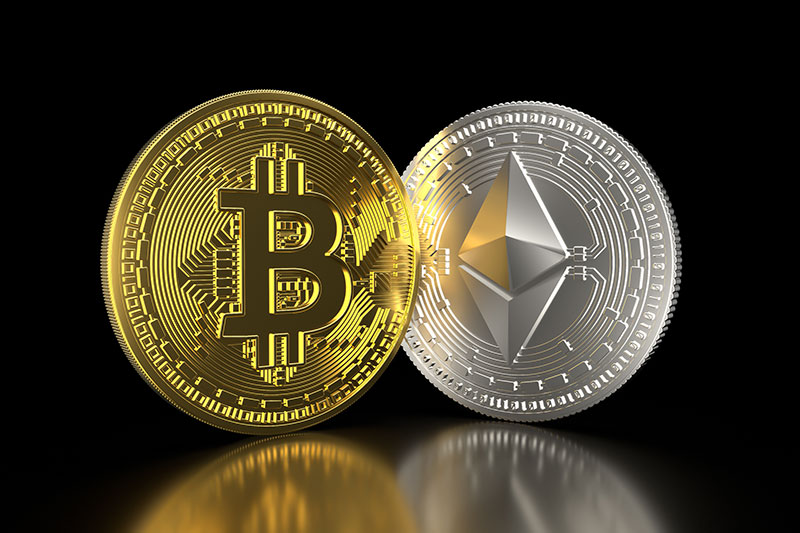
Bitcoin was the cryptocurrency that introduced blockchain technology to the world after the global financial crisis of 2008-09. Bitcoin (BTC) has established itself as the "gold standard" of cryptocurrencies and brought a revolution to the world of finance. It has become the fixed symmetry among cryptocurrencies based on blockchain technology due to its seminal advantage. Then came alternative cryptocurrencies that were created to improve on bitcoin's technical and practical challenges.
Fun Fact: It helps to know the context of what's being discussed to understand which spelling is correct when referring to Bitcoin. The capital "B" is proper when referring to the Bitcoin protocol, software, network or larger ecosystem. You're referring to a unique item, which is a proper noun and hence the capitalization.
When you are referring to bitcoin, the cryptocurrency, you're dealing with a common noun. So, the lower case is appropriate. You're dealing with a readily available, fungible currency, i.e., one unit of money can be exchanged for another of equal value without any loss or change in its usability like the U.S. dollar or the euro.
On exchange platforms, you will see the ticker symbol i.e., the nickname or abbreviation for a company, (BTC) for Bitcoin.
Alternative cryptocurrencies were created to improve on Bitcoin's technical and practical challenges. Second and third-generation blockchain-based cryptocurrencies that are not bitcoin are called altcoins. ETH (Ether), the native cryptocurrency of the Ethereum blockchain is considered an altcoin. While bitcoin is frequently quoted in USD, yuan, euros and other fiat currencies, altcoins (alternative cryptocurrencies) are typically priced in BTC.
Coins which have value attached to fiat currency like the USD are called stable coins. The value of the stable coin is equivalent to one unit of the fiat currency to which it is attached.
Bitcoin (BTC) and Ethereum (ETH) have experienced fluctuations over the years due to the broader economic environment, e.g., halving cycles, bull and bear markets and regulatory shifts, interest rates and global events. Here is a condensed version of the Bitcoin timeline.
> 2009 - 2012: Bitcoin's launch as a niche technical experiment - Bitcoin Pizza Day, i.e., the first real-world transaction, in which two pizzas were purchased for 10,000 BTC. This iconic moment signaled bitcoin's potential to function as a real-world medium of exchange.
Fun Fact: In mid-2010, bitcoin was $0.08 per coin. By the end of 2010, the price reached $0.25. It was possible to buy thousands of bitcoins at this price.
A consequential factor regarding bitcoin: increased demand from adoption, media and institutional interest affects supply and demand for the cryptocurrency. There is a limited supply cap of 21M BTC with halving events increasing scarcity.
> 2013 - 2017: Bitcoin attracts investors with increased media attention; breaks 100 USD for the first time. An historic bull run increases the coin's value to nearly 20,000 USD.
> 2018: Bitcoin experienced a dramatic price collapse after reaching the all-time high in December 2017. This volatility became known as the "crypto winter" as bitcoin steadily declined to approximately 3,200 USD, representing roughly an 84% decline from its peak. The decline was attributed to various factors, e.g., exchange hacks, investigations into market manipulation and a natural correction after a
speculative bubble.
> 2020 - 2024: Bitcoin's recovery was quick and dramatic, fueled by a combination of macroeconomic factors and increasing institutional interest, e.g., approval of the first Bitcoin ETF (Exchange Traded Fund.) The approval of the Bitcoin ETF marked a notable milestone for the cryptocurrency industry as market optimism increased with regulatory clarity and accessibility hurdles eliminated. Major financial firms e.g., BlackRock and Fidelity, are escalating crypto financial exposure with ETF's and custody services.
Custody services are usually provided by large, reputable firms, e.g., banks, trust companies or similar financial institutions empowered to safeguard individual and institutional securities from being lost or stolen. Securities include stocks, bonds, and electronic or physical assets.
Since Donald Trump has re-entered the political spotlight, Bitcoin and the broader crypto market has experienced notable shifts in regulatory, market and political dynamics.
Prior to 2024, President Trump was skeptical of bitcoin, calling it a "scam" and favoring the U.S. dollar. Presently, he accepts crypto, positioning himself as pro-bitcoin to attract voters and allows donations in the coin via Coinbase Commerce. Trump's pro-business approach to crypto is likely to reduce aggressive SEC enforcement. Crypto remains sensitive to Fed rate decisions and the strength of the
U.S. dollar. BTC could act as a hedge if inflation increases in the country.
Affect of the FIT21 Bill
The likely reduction in SEC enforcement pushes Congress to pass crypto-friendly laws, e.g., the FIT21 bill. On May 22nd 2024, the U.S. House of Representatives passed H.R. 4763, Financial Innovation for Technology for the 21st Century Act ("FIT21"). The legislation announced by the House Financial Services Committee's Chairman, Patrick McHenry (R-NC), provides "the regulatory clarity and robust consumer protections necessary for the digital asset ecosystem to thrive in the United States."
While this is the first time a major piece of crypto legislation has cleared either Chamber of Congress, the bill's future in the Senate remains unclear. Nonetheless, the bill's framework is noteworthy and, were it to become law, would impose new operational and technological requirements for digital asset providers, exchanges and brokers.
FTI21 primarily does two things:
1) It seeks to clarify and divide regulatory responsibility by classifying digital assets as either "Restricted Digital Assets" regulated by the Securities and Exchange Commission (SEC) or "Digital Commodities" regulated by Commodity Futures Trading Commission (CFTC).
2) It obligates certain actors in the digital asset space to comply with registration and disclosure requirements relating to the blockchain system on which a digital asset exists, as well as the underlying source code, transaction history and economics of the token and platform in question.
Note: Decentralization and distribution of assets to stakeholders of the Bitcoin and Ethereum block-chains is foundational to their technology. No person has the unilateral authority to materially alter the blockchain system or exclude others from participating in key features. The SEC would be permitted to challenge certification, i.e., a process that validates and verifies the characteristics of a particular crypto asset, ensuring its authenticity, compliance with regulations and security.
Final Thoughts on Ethereum and the NFT Market
Ethereum's Layer 2 networks (Arbitrium, Optimism, Base) are booming due to lower fees. Arbitrium is a protocol that makes Ethereum transactions faster and cheaper. Developers use Arbitrium to build user-friendly decentralized apps (dApps) that facilitate scalability.
Optimism also improves speed and reduces costs on the main Ethereum chain.
Base bundles transactions (optimistic rollups) off-chain and then settles them on the Ethereum main net. This reduces the load on the main net and allows for faster and cheaper transactions.
Restacking on Ethereum's Eigen Layer (Layer 2) allows users to reuse their staked ETH to secure additional applications and services on the main net (Layer 1).
Modular blockchains break down the complex tasks of a blockchain into distinct layers or modules. Each module is designed to handle a specific function such as processing transactions (execution) and finalizing transactions (settlement). This contrasts with traditional monolithic blockchains that perform all these functions on a single chain.
Modular blockchains like Celestia (Layer1) are also gaining traction with scalability, customization, lower fees and enhanced interoperability. While Celestia can be used by Layer 2 blockchains on Ethereum, it is not itself a Layer 2. It provides a separate infrastructure that allows these Layer 2's to exist independently and potentially avoid the high costs associated with posting data to the Ethereum main net.
The Non-Fungible Token (NFT's) market has experienced significant transformation since its peak in 2021-2022. In NFT's, digital assets are unique, indivisible and exist purely in the digital realm, like digital art or in-game items. NFT's for digital assets are created and traded on blockchain platforms and can fluctuate based on demand and rarity, similar to physical collectibles.
Real world assets (RWA's), on the other hand, are tangible physical items like real estate, physical art, commodities or collectibles. NFT's can represent ownership of either type, using blockchain technology to create a digital certificate of ownership.
The value of RWA NFT's is linked to the value of the underlying physical asset. Impact on that value is defined by market trends, demand and the specific characteristics of the asset. The bull market potential for NFT's, e.g., bitcoin halving events, Ethereum ETF approval, could cause activity to rise again. Bitcoin Ordinals effect on NFT's via inscriptions, have gained traction amid debates about their impact on the protocol.
NFT's: Niche or Mainstream Digital Ownership?
It's a mixed landscape for NFT's in 2025, with strong arguments for both niche and mainstream evolution. The hype has died down after the speculative frenzy on 2021-2022 leading to a more cautious and discerning market. The market is shifting towards NFT's with practical applications and real-world value as opposed to digital collectibles. The challenge for mainstream development is subject to scams, volatility and security risks. But the argument for mainstream acceptability is optimistic.
NFT's are finding practical applications in gaming, fashion, real estate, digital identity, ticketing and more. Utility-driven NFT's are gaining traction with practical applications suggesting a shift towards real-world value with a focus on long-term valuation.
Utility-driven NFT's offer practical value or functionality beyond mere ownership of a collectible like digital art by granting access to benefits, rewards and experiences. For instance, NFT's can offer exclusive access to tickets for online concerts or live concert events. A membership community rewards discounts and access to artists and sports personalities and voting rights in community forums.
The market is maturing with the integration of Artificial Intelligence and the metaverse. Establishing regulatory clarity will build trust and encourage broader participation in NFT's. New standards and cross-chain support are making NFT's more versatile. Corporate adoption by major brands like Nike, Adidas and Starbucks are exploring and launching NFT initiatives.
Bottom line: Whether NFT's ultimately become a niche investment or a mainstream asset depends on how the issues of scalability, usability and regulation are addressed.
In the next issue of MANIFEST, we will discuss NFT's and the Revolution in Tokenized Gaming
Five Major Social Security Changes Coming in 2025

Social Security benefits play a critical role in the lives of 90% Americans, 65 or older, with a guaranteed income source that represents about 31% of their total income. Social Security can be a primary source of income for individuals with disabilities. These updates announced by the Social Security Administration (SSA) significantly impacts approximately 70 million beneficiaries across the country receiving benefits totaling $1.6 trillion paid annually.
Fun Facts: Retired workers and their dependents accounted for 78.5% of total benefits paid in 2024.
Disabled workers and their dependents accounted for 10.5% of total benefits paid in 2024.
In the U.S., the current life expectancy at birth is 78.4 years. This is a slight increase from 77.5 years in 2022 but still below the pre-pandemic level of 78.8 years in 2019. The average life expectancy for men is about 74.8 years, while for women it's about 80.2 years.
The number of Americans 65 and older will increase from about 61 million in 2023 to approximately 77 million by 2035.
In 2023, there were an estimated 2.7 covered workers per each Social Security beneficiary.
By 2035, the Trustees of the SSA estimate there will be 2.4 covered workers for each beneficiary. Here are five Social Security changes to see in 2025:
1) Social Security beneficiaries will see a 2.5% increase in their benefits due to the annual Cost-Of-Living Adjustment (COLA). The COLA ensures that Social Security benefits increase with a rise in inflation. Each year, the SSA calculates the COLA based on changes in the Consumer Price Index for Urban Wage Earners and Clerical Workers (CPI-W). This index measures price changes for everyday goods and services in the country. Per the SSA announcement in 2024, starting in 2025, the COLA will be set at 2.5% for the following year.
The SSA has fixed the COLA at 2.5% based on the average CPI-W for the third quarter of 2024. Due to this COLA boost, the average monthly Social Security benefit for retirees will rise from $1,927 to $1,976. This can result in an additional $49per month or $588 for the entire year.
It is important to note that COLA increases apply to all beneficiaries, including those collecting Social Security benefits due to disability or as survivors of covered workers, such as spouses. It is worth noting that the 2025 COLA is smaller than the 3.2% increase in 2024 and significantly lower than the 8.7% boost in 2023.
2) For those retiring in 2025, the maximum Social Security benefit will increase. Currently, the maximum monthly benefit for newly awarded retirees is $4,873, as of 2024. However, in 2025, this will rise to $5,108 per month. This is an increase of approximately 4.82% from 2024 to 2025 and can help retirees be more financially secure.
3) In 2025, workers will see an increase in the amount of income subject to Social Security taxes. While Social Security taxes are often confused with federal and state income taxes, they are separate. Unlike federal taxes, which apply to all types of income, Social Security taxes are only applied to a certain amount of earnings each year. For 2025, that cap is set at $176,100, up from $168,600 in 2024.
Starting in 2025, workers will pay Social Security taxes on income up to $176,100 and any earnings above that amount will not be subject to the Social Security portion of payroll taxes.
4) Another significant Social Security change in 2025 is the increase in the cost of earning a Social Security credit, also known as a quarter of coverage. Workers need to accumulate at least 40 credits throughout their working years to qualify for retirement benefits. You can earn a maximum of four credits per year, which is important to keep track of earnings to ensure your eligibility for benefits.
In 2025, the earnings required to earn one Social Security credit will rise to $1,810 from $1,730 in 2024. Tracking your earnings and planning ahead is important. This is especially critical if you are nearing retirement. You need a total of 40 accumulated credits to qualify for benefits. Each year counts and even one year of lapse can set you behind in retirement planning.
5) For 2025, the earnings test thresholds are also increasing, which will impact how much you are allowed to make on Social Security without affecting your benefits. The earnings test applies to people between the ages of 62 and their Full Retirement Age (FRA), which ranges between 66 and 67 depending on your birth year. In calculating benefits, the SSA always applies the annual earnings test first. Based on that test, the agency temporarily withholds $1 of a worker's benefits for every $2 earned over $23,400 in 2025, up from $22,320 in 2024.
In a year the worker hits FRA, the test is more generous. The worker forfeits $1 in benefits for every $3 in 2025 earnings above $62,160, an increase of $2,640 over the 2024 limit of $59,420.
In the month that a worker hits FRA, the annual earnings test goes away. The worker can earn whatever he or she likes and the monthly benefit amount will be adjusted upward to account for all benefits forfeited in the past. These new Social Security changes will have varying impacts on different people, depending on their personal circumstances. It is crucial to understand how these adjustments affect you specifically so you can avoid miscalculating your individual retirement requirements.
Source: Social Security Administration Fact Sheet